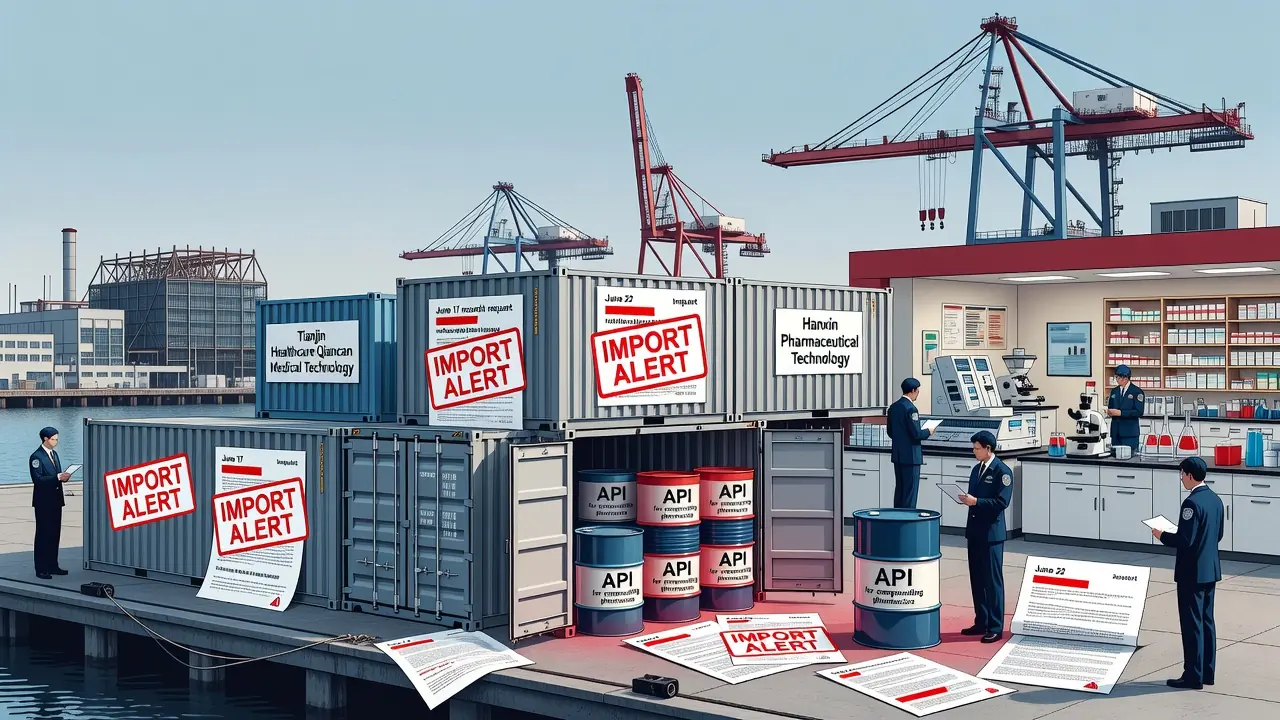
The U.S. Food and Drug Administration has published warning letters against three China-based manufacturers of active pharmaceutical ingredients (APIs) after each company declined to turn over records the agency requested during routine oversight. All three firms - Tianjin Healthcare Medical Technology, Chongqing Qiancan Technology and Hanxin Pharmaceutical Technology - have had their U.S.-bound products placed on import alert this year.
What the FDA found
The FDA sent an initial records request to Tianjin Healthcare Medical Technology (THM) on June 17 after identifying multiple API shipments to the United States for pharmacy compounding that named THM as the manufacturer. THM replied a week later that it would stop producing the relevant products for the U.S. market but still declined to hand over the requested documentation. The FDA followed up, noting the ingredients already shipped to the U.S. remained within their expiration dates and that the company's regulatory obligations had not lapsed simply because it said it would halt production.
Chongqing Qiancan Technology (CQT) received a similar request the same day, also tied to prescription compounding API imported into the U.S. under its name. According to the FDA, CQT de-registered its drug listing on June 29, 2026, one day before replying on June 30 that it could not meet the agency's documentation requirements. The FDA noted the ingredients remained within expiry despite the de-registration, and that CQT re-registered on July 13. Both THM's and CQT's products were placed on import alert in late August.
A third firm cited for quality-unit lapses
Hanxin Pharmaceutical Technology received a separate warning letter earlier this month after the FDA reviewed records the company did submit and found its quality unit had failed to properly vet suppliers of critical raw materials used in certain drug ingredients. When the FDA asked for additional quality records, Hanxin did not comply and instead told the agency it had moved production of some products to another subsidiary.
The letter, heavily redacted in its public version, also states that Hanxin's manufacturer registration lists APIs that were not disclosed in response to an earlier records request - including one product the FDA says "is not an API permissible for use in human drug compounding." The agency said it was concerned the company may have misidentified itself as the manufacturer of certain ingredients to sidestep regulatory safeguards, a practice that could put patients receiving compounded drugs made from those ingredients at risk. Hanxin's products were placed on import alert as of June 22.
Why this matters for compounded drugs
APIs sourced from overseas manufacturers often enter the U.S. supply chain for use by compounding pharmacies, which prepare customized medications not otherwise commercially available. When a manufacturer refuses to document its production practices, the FDA loses its ability to verify ingredient quality, sourcing and safety - information compounding pharmacies and, ultimately, patients rely on indirectly. Import alerts allow the FDA to detain shipments from flagged manufacturers at U.S. ports without physical inspection, effectively cutting off that supply until the companies respond or demonstrate compliance. The three cases illustrate a recurring theme in FDA oversight of foreign API suppliers: regulatory authority depends heavily on manufacturers' willingness to cooperate with document requests, and gaps in that cooperation can trigger swift import restrictions even before a full quality investigation concludes.